

Introduction – Why Is My Child Afraid of Water?
Does your child enjoy splashing around during bath time but become frightened the moment you approach a swimming pool? Perhaps they cling to you, refuse to enter the water or start crying when swimming lessons begin.
For some children, swimming pools can feel unfamiliar or overwhelming, especially when they have not had many positive experiences in water. Others may develop fears after an unpleasant incident, such as slipping or accidentally swallowing water.
As swimming coaches, we understand that every child approaches water differently. With patience, reassurance and gradual exposure, many children can become more comfortable in water and begin developing their swimming skills at their own pace.
Why Are Some Children Afraid of Water?
Understanding what makes your child uncomfortable is an important first step. Fear of water can develop for several reasons, and recognising possible triggers can help parents provide appropriate support.
Previous Unpleasant Experiences
An unpleasant experience, such as slipping or accidentally swallowing pool water, may make some children more hesitant about swimming.
Being unexpectedly splashed or submerged before feeling ready can also be frightening. However, not every child develops a lasting fear after such an incident.
Rather than dismissing your child’s concerns, acknowledge what happened and allow them to become familiar with water again through manageable activities.
Unfamiliar Swimming Pool Environments
A swimming pool is very different from a bathtub. The larger space, unfamiliar depth, echoes and sounds of people splashing can make some children uncomfortable.
Busy public swimming complexes and condominium pools in Singapore may also feel overwhelming to children who are sensitive to noise or unfamiliar surroundings.
Allowing your child time to observe the pool and become familiar with the environment can make the experience feel less intimidating.
Discomfort With Water Around the Face
Some children dislike water entering their eyes or nose. Others become frightened when asked to put their face underwater because they are still learning how to control their breathing.
These sensations can feel unfamiliar, particularly for beginners. Introducing activities such as gently blowing bubbles at the water’s surface may help children become more comfortable without rushing them into submersion.
Fear of Losing Balance or Control
Young children may feel secure when their feet are firmly on the ground. In water, buoyancy and movement create unfamiliar sensations that can affect their sense of balance.
A child who cannot touch the pool floor may worry about sinking or being unable to keep their head above water.
Supported activities in suitable shallow water can help children become familiar with these sensations while remaining close to a responsible adult or swimming instructor.
How Can You Recognise When Your Child Is Afraid of Water?
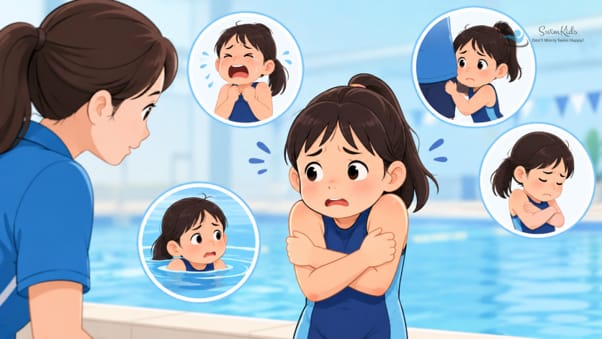
Children do not always have the words to explain why swimming makes them uncomfortable. Instead, their feelings may appear through their behaviour.
Common signs include:
- Crying or refusing to approach the swimming pool.
- Clinging tightly to a parent or swimming instructor.
- Becoming unusually quiet, tense or hesitant.
- Avoiding activities such as floating or putting their face in water.
- Showing distress before swimming lessons begin.
However, these behaviours do not always indicate fear. A child may simply be tired, cold or overwhelmed.
Try asking gentle questions such as, “Is there something about the pool that worries you?” Understanding when your child becomes uncomfortable can help you identify the support they need.
How Can Parents Help Their Child Feel More Comfortable in Water?
Helping a child who is afraid of water requires patience and realistic expectations. Rather than focusing on how quickly they can swim, begin by making water activities feel familiar and manageable.
Listen to Your Child and Acknowledge Their Fear
When your child says they are frightened, avoid immediately telling them there is nothing to worry about.
Instead, acknowledge how they feel and offer reassurance. A simple response such as, “We can go slowly, and I’ll stay close to you,” can help your child feel supported.
Avoid comparing them with siblings or other children who are already comfortable in the pool. Every child has different experiences and develops confidence at their own pace.
Begin With Gentle Water Play at Home
Before introducing swimming pool activities, parents can encourage positive experiences with water at home.
During supervised bath time, try simple activities such as splashing with hands, playing with floating toys or gently pouring water over the arms.
These activities allow children to explore water in a familiar environment. Avoid suddenly pouring water over their face or asking them to submerge their head before they feel ready.
Remember that young children require constant, close adult supervision during bath time, even when the water is shallow.
Introduce the Swimming Pool One Step at a Time
There is no need to expect your child to enter the swimming pool immediately.
Start by allowing your child to observe the pool with you. Once they feel comfortable, you can introduce supervised activities at the poolside before helping them enter suitable shallow water using safe entry points.
Depending on their readiness, the next steps may include:
- Entering shallow water using the pool steps with adult support.
- Standing comfortably while holding onto a parent or the pool edge.
- Trying gentle supported kicking movements.
- Practising blowing bubbles at the water’s surface.
- Exploring supported floating when they are ready.
These activities are examples rather than a fixed learning sequence. If your child becomes distressed, return to something familiar instead of pushing them to complete the next step.
Make Water Activities Enjoyable
Children often respond well to playful activities that do not feel like formal swimming practice.
You can introduce floating toys, simple water games or familiar songs to encourage participation. Keep activities predictable so your child understands what will happen next.
The aim is to create enjoyable experiences without making your child feel pressured to perform.
Celebrate Small Achievements
Progress does not always mean swimming a longer distance or learning a new stroke.
For a nervous beginner, simply entering the shallow end or trying to blow bubbles can be a meaningful achievement.
Recognise these efforts with specific encouragement, such as, “You tried putting your hands in the water today. Well done!”
Positive feedback can help children recognise their progress without feeling that they must achieve everything immediately.
What Should Parents Avoid When Helping a Child Who Fears Water?
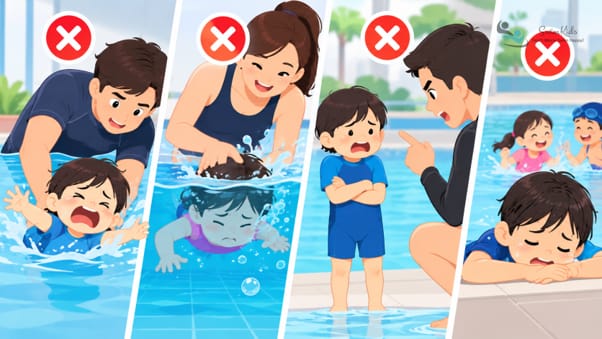
Parents naturally want their children to overcome difficulties, but pushing too hard can make swimming experiences more stressful.
Avoid forcing a frightened child underwater, rushing them into deeper water or insisting that they complete an activity despite significant distress. These experiences may increase their reluctance to participate.
It is also important to recognise when your child needs a break. Persistent crying, freezing or repeated attempts to leave the water suggest that the activity should be paused or adjusted.
Gentle encouragement is helpful, but it should never involve ignoring a child’s distress or compromising their safety.
If your child is struggling with a particular activity, return to something they already feel comfortable doing. Building confidence gradually is more important than completing every activity in a single session.
How Can Parents Prepare an Anxious Child for Swimming Lessons?
For children who are nervous about swimming, preparation before their first lesson can make the experience feel more predictable.
Talk About What to Expect
Explain that swimming lessons usually begin with activities suited to the child’s ability and confidence.
Describe the swimming pool, the instructor and the types of activities your child may practise. If possible, visit the swimming complex beforehand so they can become familiar with the surroundings.
Keep explanations simple and avoid promising that every activity will feel comfortable immediately.
Communicate With the Swimming Coach
Before lessons begin, tell the swimming coach about any previous frightening experiences or activities that make your child uncomfortable.
For example, your child may dislike having water splashed onto their face or feel anxious when moving away from the pool steps.
Sharing this information helps the coach understand your child’s needs and consider suitable adjustments to introductory activities.
Choose a Supportive Learning Environment
When selecting swimming lessons in Singapore, consider whether the coach has experience teaching nervous beginners.
Patient instruction, appropriate supervision and activities suited to the child’s readiness are important considerations.
Parents can also ask about class arrangements and how the instructor responds when a child becomes distressed during a lesson.
How Can Swimming Lessons Help Children Build Water Confidence?
Structured swimming lessons can provide opportunities for children to become familiar with water while learning important swimming and safety skills.
An experienced swimming coach can introduce beginner activities progressively, including safe pool entry and exit, blowing bubbles, supported floating and basic movements.
For children who are particularly nervous, instructors may need to spend additional time on water familiarisation before introducing more challenging swimming skills.
In Singapore, the SwimSafer programme follows a progressive approach to swimming proficiency, water survival and safety education. Its introductory stage includes developing confidence and independence in water.
For a frightened child, lessons should be adapted to their readiness rather than focused solely on completing skills quickly.
Although swimming instruction can support confidence, progress varies, and no particular lesson format can guarantee that every child will overcome their fear.
How Long Does It Take for a Child to Overcome Their Fear of Water?
There is no fixed timeframe for a child to become comfortable in water.
Some children become more willing to participate after several positive experiences, while others need a longer period of familiarisation and support.
Previous experiences, individual readiness and the learning environment can all influence progress. Rather than counting lessons, focus on whether your child is becoming more comfortable with manageable activities.
If your child’s fear is intense, continues despite gentle support or begins affecting everyday activities such as bathing, consider speaking with a healthcare professional for further guidance.
Why Is Water Safety Still Important as Your Child Gains Confidence?
Feeling confident in water is not the same as being able to swim safely without assistance.
Whether your family visits a public swimming complex or uses a condominium pool in Singapore, active adult supervision remains essential. Young children should be kept within close adult reach when in water.
Inflatable toys and swimming aids should never be treated as replacements for supervision or appropriate safety equipment.
As children gain confidence, continue reinforcing safe pool behaviour alongside their developing swimming skills.
Frequently Asked Questions
1. Is It Normal for a Young Child to Be Afraid of Water?
Yes. Some children are cautious around unfamiliar water environments. Their comfort levels may improve with patient support and positive experiences.
2. Should I Force My Child to Enter the Swimming Pool?
No. Forced entry or submersion may increase distress. Introduce water gradually and encourage participation when your child is ready.
3. Can Children Learn to Swim If They Are Frightened of Water?
Yes. Many nervous beginners can develop swimming skills through appropriately paced activities, supportive instruction and regular positive experiences.
4. What Should I Do If My Child Keeps Crying During Swimming Lessons?
Speak with the instructor to identify possible triggers. Consider adjusting the activities, pace or learning environment rather than insisting that your child continue while distressed.
5. Can I Help My Child Feel Comfortable in Water at Home?
Yes. Closely supervised bath-time play, floating toys and gentle splashing can help introduce water in a familiar, low-pressure environment.
Conclusion – Helping Your Child Become Comfortable With Water
A child’s fear of water may come from unfamiliar sensations, previous unpleasant experiences or uncertainty about the swimming environment. Understanding these concerns is the first step towards helping them feel more comfortable.
With patience, gentle encouragement and gradual practice, many children can develop greater water confidence.
If your child is nervous about swimming, supportive instruction can help them explore new skills at an appropriate pace. At SwimDolphia, parents can explore swimming lessons in Singapore and discuss their child’s needs with a swimming coach.