
Introduction: How Swimming Supports Healthy Physical Development in Growing Children
When parents think about swimming lessons, water safety is often the first benefit that comes to mind. While learning to swim is an essential life skill, swimming also plays an important role in supporting a child’s physical development.
Swimming is a full-body activity that encourages children to move in ways they may not experience during everyday play. As they learn new skills and progress through different stages of swimming, they develop strength, coordination, balance, and movement control.
As a swimming coach in Singapore, I have seen many children become stronger and more confident through regular lessons. The physical skills they develop in the pool often help them participate more comfortably in other activities both in and out of the water.
Why Swimming Is Well-Suited to Growing Children
A Low-Impact Form of Exercise
Children are constantly developing physically, and it is important to choose activities that encourage movement while being suitable for growing bodies.
One of the unique benefits of swimming is that water supports much of the body’s weight. This allows children to move freely without placing the same level of impact on their joints that some land-based activities may involve.
Because of this supportive environment, children of different ages and abilities can participate comfortably while developing important physical skills.
A Whole-Body Activity
Swimming involves much more than simply moving through the water.
Each stroke requires the arms, legs, core, shoulders, and back to work together. At the same time, children must manage their breathing and maintain body position.
This combination of movements encourages balanced physical development while helping children become more aware of how their bodies move.
How Swimming Helps Build Strength Throughout the Body
Natural Resistance in the Water
Unlike many activities performed on land, swimming takes place in an environment that naturally provides resistance.
Every kick, pull, and stroke requires children to move against the water. This creates a gentle form of resistance that encourages muscles throughout the body to work continuously.
As children practise regularly, they gradually develop strength through movement rather than through high-impact exercise.
Developing Functional Strength
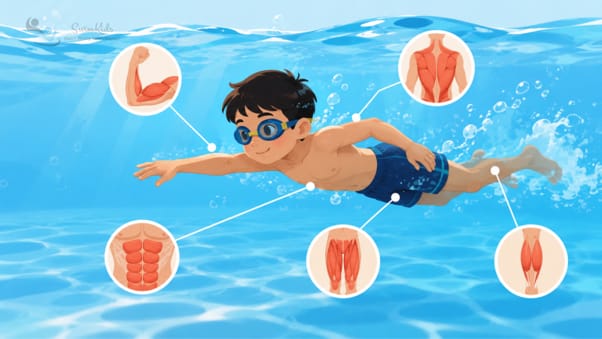
Swimming helps strengthen several key muscle groups at the same time.
The arms and shoulders contribute to propulsion through the water, while the core muscles help maintain balance and body position. The legs generate power during kicking movements, and the back muscles assist with stability and control.
These combined movements support the development of functional strength that children can use in everyday activities.
Benefits Beyond Swimming
Improved strength can help children feel more comfortable when participating in playground activities, physical education lessons, and recreational sports.
When children feel physically capable, they are often more willing to explore new activities and movement challenges.
Swimming Supports Coordination and Motor Skill Development
Learning to Coordinate Multiple Movements
Swimming is a skill that requires different parts of the body to work together.
Children learn to coordinate arm actions, leg kicks, breathing patterns, and body positioning at the same time. This process helps them develop greater control over their movements.
As their skills improve, these movements become smoother and more efficient.
Developing Fundamental Movement Skills
Fundamental movement skills form the foundation for many physical activities.
Swimming encourages children to develop body control, movement awareness, timing, and coordination. These abilities are important for overall physical development and can support participation in a wide range of activities.
Developing these skills during childhood can help children feel more confident when engaging in different forms of movement.
Supporting Other Physical Activities
The coordination developed through swimming can be beneficial in many situations beyond the pool.
Activities such as cycling, running, ball sports, and playground games all rely on movement control and body awareness. Swimming provides another opportunity for children to strengthen these important abilities.
Improving Balance, Body Awareness, and Control
Understanding How the Body Moves
Water creates a unique environment where children learn how different body positions affect movement.
Skills such as floating, gliding, and changing direction require children to understand how to control their bodies while remaining balanced in the water.
This ongoing practice helps improve overall movement awareness.
Developing Spatial Awareness
Swimming encourages children to become more aware of where their bodies are in relation to their surroundings.
As they learn different swimming techniques, they begin to understand positioning, direction, and movement efficiency. These experiences contribute to improved body awareness and physical control.
Over time, children often become more comfortable and confident when performing a variety of physical tasks.
Building Physical Confidence
Every new swimming skill achieved represents progress.
Whether a child learns to float independently, swim a longer distance, or master a new stroke, these achievements help build confidence in their physical abilities.
This confidence often encourages children to continue exploring and participating in active pursuits.
How Swimming Supports Heart and Lung Fitness
A Cardiovascular Activity for Children
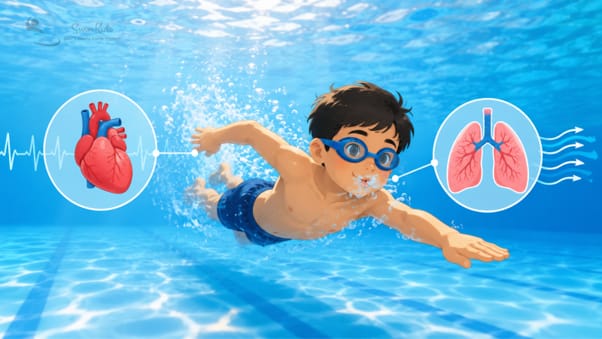
Swimming keeps the body moving continuously, making it an effective cardiovascular activity.
As children swim, their heart and lungs work together to deliver oxygen to the muscles being used throughout the activity. Regular participation can help improve cardiovascular fitness and overall endurance.
These benefits become more noticeable as children progress and spend longer periods moving in the water.
Learning Breathing Control
Breathing is an important part of swimming technique.
Children learn how to coordinate their breathing with their movements, which helps them swim more efficiently. As they gain experience, they become more comfortable managing breathing patterns during different swimming activities.
Learning this skill is an important part of becoming a confident swimmer.
Gradually Building Endurance
Swimming lessons often involve repeated practice and sustained movement.
As children’s skills improve, they are usually able to swim for longer periods without becoming tired as quickly. This gradual progression helps develop stamina while encouraging consistent physical activity.
Encouraging Positive Movement Habits from an Early Age
Making Physical Activity Enjoyable
Children are more likely to remain engaged in activities they enjoy.
Swimming lessons often combine learning, movement, and fun, creating a positive environment that encourages participation. Enjoyable experiences can help children develop a healthy attitude towards physical activity.
This positive approach often makes children more enthusiastic about staying active.
Learning Through Progression
Swimming is built around the gradual development of skills.
Children move through different stages as they learn to float, kick, breathe correctly, and perform various strokes. This step-by-step progression helps them understand the value of practice and persistence.
Each milestone achieved contributes to both physical development and self-confidence.
Supporting Continued Participation in Physical Activity
Developing movement skills during childhood can help children feel more confident participating in different physical activities as they grow.
Swimming provides opportunities to improve strength, coordination, balance, and endurance in a single activity, making it a valuable addition to a child’s active lifestyle.
Why Swimming Is Particularly Valuable for Children in Singapore
Easy Access to Swimming Facilities
Singapore offers excellent access to swimming facilities through public pools, schools, and residential developments.
This makes it easier for children to learn swimming and practise regularly throughout the year.
Consistent access allows children to continue building skills and confidence over time.
Year-Round Opportunities to Swim
Singapore’s warm climate allows swimming lessons and recreational swimming to take place throughout the year.
Unlike countries with long winters, children in Singapore can enjoy regular exposure to the water without major seasonal interruptions.
This consistency supports ongoing skill development and physical activity.
Combining Physical Development with Water Safety
Swimming offers a combination of benefits that few activities can match.
Children not only develop important physical abilities, but they also learn essential water safety skills that can help them feel more confident around pools and other aquatic environments.
For many families, this combination makes swimming one of the most valuable activities a child can learn.
Conclusion
Swimming is much more than a recreational activity or a way to stay safe in the water. It provides children with opportunities to build strength, improve coordination, develop balance, enhance body awareness, and increase endurance through regular movement.
Because swimming engages the entire body while remaining gentle on growing joints, it is well-suited to children at different stages of development. The skills gained through swimming can support participation in a variety of physical activities both inside and outside the pool.
For children growing up in Singapore, swimming offers a practical and enjoyable way to stay active while developing important physical abilities that can benefit them throughout childhood and beyond.
Frequently Asked Questions
How does swimming support a child’s physical development?
Swimming supports physical development by engaging multiple muscle groups while improving coordination, balance, body awareness, and cardiovascular fitness. It provides a full-body workout in a low-impact environment, making it suitable for growing children.
Is swimming a good exercise for growing children?
Yes, swimming is an excellent activity for growing children. It encourages regular physical activity, helps develop strength and endurance, and supports the development of important movement skills while remaining gentle on the joints.
How does swimming improve coordination and balance in children?
Swimming requires children to coordinate arm movements, leg kicks, breathing, and body positioning simultaneously. This helps develop motor skills, balance, body control, and movement awareness.
Can swimming help improve a child’s strength and endurance?
Swimming helps build strength because water provides natural resistance during movement. Regular participation also helps children gradually develop endurance and stamina as their swimming skills improve.
Why is swimming particularly beneficial for children in Singapore?
Swimming is especially beneficial in Singapore because children have access to swimming facilities throughout the year. In addition to supporting physical development, swimming also teaches valuable water safety skills that can last a lifetime.