
Introduction: Making the First Swimming Lesson a Positive Experience
For many children, the first swimming lesson can feel exciting, unfamiliar, and slightly overwhelming. A positive first experience helps children gradually build comfort and confidence in the water from the beginning.
In Singapore, swimming is more than just a recreational activity. With condominium pools, public swimming complexes, water play areas, and beaches being part of everyday life, learning basic water safety skills is important for children growing up here.
It is completely normal for some children to feel shy or nervous during their first lesson. Many children need a few sessions before they fully settle into the pool environment and feel comfortable participating.
Simple preparation can make a big difference. Talking positively about swimming, arriving early, bringing familiar items, and staying calm as a parent can help children feel more secure and ready to enjoy the experience.
The first swimming lesson is not about perfect technique or swimming independently straight away. The main goal is to help children feel safe, comfortable, and confident in the water step by step.
Why Swimming Lessons Are Important for Children in Singapore
Swimming as an Essential Life Skill
Children in Singapore are regularly exposed to water environments such as swimming pools, water parks, and beaches. Because of this, swimming is not only a sport but also an important life skill that supports water safety from a young age.
Early exposure to swimming can help children become more familiar and comfortable around water. Children who gradually build water confidence are often calmer and more cooperative during lessons and supervised water activities.
Physical and Developmental Benefits
Swimming supports physical development by improving coordination, balance, flexibility, and motor skills. Water movement also encourages children to stay active while gently and safely working different muscle groups.
Structured swimming lessons may also help children develop listening skills, patience, and confidence. Learning new skills gradually can encourage children to become more independent over time.
Building Long-Term Water Confidence
Children usually respond better when swimming is introduced gradually in a calm and supportive way. Gentle water familiarisation often helps children feel more secure than being pressured to enter the water too quickly.
Positive early experiences can help children develop a more comfortable relationship with swimming. When lessons feel enjoyable and encouraging, children are often more willing to continue learning and participating confidently.
Choosing the Right Time for Your Child’s First Lesson
Understanding Age Readiness
Many swim schools in Singapore offer baby swimming classes from around six months old, while toddler and preschool programmes are commonly designed for children between one and four years old. Older children can also begin swimming lessons successfully, even without previous pool experience.
However, readiness is not only about age. Emotional comfort and willingness to participate are often more important than starting lessons as early as possible.
Signs Your Child May Be Ready
Children who enjoy playing during bath time or feel comfortable around water may adjust more easily to swimming lessons. Being able to follow simple instructions can also help children participate more comfortably during class activities.
Curiosity and excitement are also positive signs. Children who show interest in pools, swimming gear, or watching others swim are often more open to learning.
When Parents Should Wait a Little Longer
If a child shows intense fear of water, feels unwell, or becomes extremely distressed near the pool, parents may consider introducing water more gradually first. A slower approach can sometimes help children feel safer before formal lessons begin.
Patience and gentle encouragement often help children build confidence more naturally over time.
Talking to Your Child Before the First Lesson
Introducing Swimming in a Positive Way
The way parents speak about swimming can influence how children feel before their lesson. Speaking calmly and positively helps children view swimming as something enjoyable rather than stressful.
It is also helpful to avoid creating unrealistic expectations. Children do not need to learn everything immediately during their first lesson.
Explaining What Will Happen During Class
Children often feel more comfortable when they know what to expect. Parents can explain that they will meet a friendly swim coach, enter the pool slowly, and take part in simple activities.
Most beginner lessons include splashing, kicking, floating with support, and water games designed to help children feel comfortable in the pool.
Avoiding Fear-Based Language
Phrases such as “Don’t be scared” or “You must not cry” may accidentally increase anxiety by focusing attention on fear. Young children often respond strongly to the emotional tone used by adults around them.
Instead, parents can use encouraging phrases such as “You’ll have fun in the water” or “Your coach will help you slowly.” Positive language often helps children feel calmer and more secure.
What Parents Should Pack for the First Swimming Lesson
Essential Swimwear and Gear
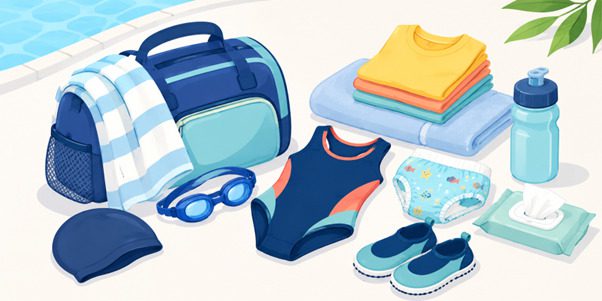
Comfortable swimwear helps children move freely and comfortably in the water. Some swim schools may also require swimming caps, especially in public pools.
Older children may prefer goggles if they are sensitive to splashing or chlorine. Parents should also bring a towel and a full change of clothes after the lesson.
Items for Babies and Toddlers
Babies and toddlers usually require swim diapers or swim nappies during lessons. Extra diapers, wipes, and lightweight warm clothing are also useful after swimming.
Helpful Comfort Items
A favourite small towel or comfort toy may help younger children feel more secure in an unfamiliar environment. Bringing a water bottle and a light snack after class can also help children recharge.
Parents do not need to overpack for the first lesson. Keeping things simple and organised often helps the experience feel less stressful.
Preparing Your Child Physically Before the Lesson
Ensuring Your Child Is Well Rested
Children may feel more comfortable and cooperative during lessons when they are well rested. Tired children can become overwhelmed or emotional more easily in a new environment.
For babies and toddlers, planning lessons around regular nap times may help them settle more comfortably during class.
Meal Timing Before Swimming
A light meal or snack around one to two hours before swimming is usually recommended. This helps provide energy without making children feel overly full or uncomfortable in the water.
Heavy meals immediately before swimming may cause stomach discomfort during movement in the pool.
Toilet and Shower Routine
Encouraging children to use the toilet before class can help reduce interruptions during lessons. Establishing a simple pre-swim routine may also help children feel more prepared.
Pre-swim showers are important for hygiene and help rinse away sweat, dirt, and skincare products before entering the pool.
What Happens During a First Swimming Lesson
Gentle Water Familiarisation
Most first lessons begin slowly to help children feel comfortable and secure in the water. Coaches usually encourage children to enter the pool gradually instead of rushing into activities immediately.
Simple movements such as splashing, walking in shallow water, and getting used to water on the face are often introduced first.
Basic Beginner Skills
Beginner lessons commonly focus on simple foundational skills such as kicking, blowing bubbles, floating with support, and basic pool safety awareness.
Children may also learn important habits such as holding the pool edge properly and listening carefully to instructions.
Why Coaches Focus on Confidence First
During the early stages, coaches usually prioritise comfort and water confidence before advanced swimming techniques. More structured stroke work often comes later once children feel relaxed and secure in the pool.
A supportive and positive environment can encourage children to participate more confidently and continue progressing steadily.
How Parents Should Behave During the First Lesson
Staying Calm and Encouraging
Children often notice and respond to the emotions of their parents. When parents remain calm and encouraging, children may feel more secure during lessons.
Relaxed body language and gentle encouragement can help children settle more comfortably in unfamiliar surroundings.
Avoiding Too Much Interference
It is important to allow the swim coach to guide the lesson. Coaches are trained to introduce activities gradually while helping children feel safe and engaged.
Too many instructions from parents at the side of the pool may confuse children or distract them from the lesson.
Praising Effort Instead of Performance
Parents should focus on encouraging effort rather than expecting immediate swimming ability. Small achievements such as entering the water, listening carefully, or trying a new movement are important early milestones.
Positive encouragement often helps children feel proud of their progress and more motivated to continue learning.
Managing Fear, Tears, or Nervousness
Understanding That Anxiety Is Normal
It is common for children to feel nervous during their first few swimming lessons. Many children need time to adjust to the new environment, coach, and activities.
Fear during early lessons does not mean a child cannot learn swimming successfully in the future.
Common First-Lesson Reactions
Some children may cry, cling to parents, or hesitate to enter the water initially. Others may prefer to observe quietly before joining activities.
These reactions are often part of the adjustment process rather than a sign that lessons are unsuitable.
How Parents Can Help
Parents can help most by remaining patient, calm, and supportive throughout the learning process. Avoiding punishment, embarrassment, or pressure may help children feel safer during lessons.
Keeping experiences positive and consistent often helps children gradually become more comfortable in the water.
Common Mistakes Parents Should Avoid
Comparing Children to Others
Every child learns differently and progresses at their own pace. Comparing children to classmates may create unnecessary pressure and reduce confidence.
Some children feel comfortable quickly, while others simply need more time to adapt.
Expecting Immediate Swimming Skills
Swimming skills develop gradually through repetition and regular practice. Children generally learn foundational skills such as floating, kicking, and breathing control before progressing further.
Parents should focus on gradual improvement instead of expecting fast results.
Missing Lessons Frequently
Regular attendance helps children become more familiar with the swimming environment, routines, and coach. Consistency may also help children feel more confident during lessons.
Long gaps between classes can sometimes slow progress or reduce familiarity with water activities.
Putting Too Much Pressure on the Child
Swimming lessons should feel safe, encouraging, and enjoyable for young children. Excessive pressure may increase anxiety and reduce motivation.
Children often learn more comfortably when they feel supported rather than judged.
Helping Your Child Progress After the First Lesson
Practising Comfort in the Water
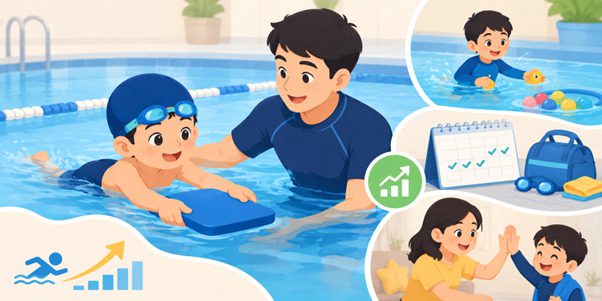
Relaxed family pool visits can help children continue building water familiarity outside formal lessons. Simple supervised activities such as splashing, kicking gently, or playing water games can help children feel more comfortable.
Positive experiences in the water often encourage children to participate more confidently during future lessons.
Building Routine and Familiarity
Consistent lesson schedules can help children become more familiar with the pool environment and coaching routines. Repeated exposure often helps children feel calmer and more settled over time.
Small improvements usually become easier to notice with regular practice.
Encouraging Without Forcing
Simple praise for effort, bravery, or participation can help children stay motivated. Positive reinforcement at home often supports confidence during lessons.
Parents should avoid forcing children beyond their comfort level too quickly. Gentle encouragement and patience usually support healthier long-term progress.
Choosing the Right Swim School or Coach in Singapore
What Parents Should Look For
Parents should look for qualified and experienced swim coaches who understand how to teach children safely and patiently. A child-friendly teaching approach often helps beginners feel more comfortable and supported.
The learning environment should also feel clean, organised, and safe for young swimmers.
Group vs Private Lessons
Group lessons can help children socialise and learn together in a fun setting. Private lessons may suit children who prefer more individual attention or feel nervous in larger groups.
The best option often depends on the child’s personality and comfort level.
Importance of Water Safety Focus
A good swimming programme should prioritise safety and confidence before advanced swimming techniques. Skills such as floating, safe pool behaviour, and breathing control form an important foundation for future learning.
Children who feel secure in the water are often more willing to participate and progress steadily over time.
Conclusion: Building Confidence One Lesson at a Time
Every child adapts differently to swimming lessons, and that is completely normal. Some children settle quickly, while others need more time, patience, and encouragement before feeling fully comfortable.
The most important thing is not how fast a child learns, but how positively they experience the process. Consistency, support, and gentle encouragement often play a major role in helping children build long-term confidence in the water.
Parents should remember that the first swimming lesson is mainly about comfort and familiarity rather than perfect technique. Building trust, confidence, and positive experiences early on can help children develop a healthier relationship with swimming over time.
With supportive coaching and regular practice, swimming can become a valuable lifelong skill that supports both water safety and physical confidence.
Frequently Asked Questions
What is the best age to start swimming lessons in Singapore?
Many children can begin basic water familiarisation from around six months old through parent-assisted classes. However, readiness depends more on comfort, confidence, and emotional readiness than age alone.
What should my child bring to their first swimming lesson?
Parents should prepare swimwear, a towel, a change of clothes, and a swimming cap if required. Babies and toddlers may also need swim diapers, wipes, and warm clothing after class.
Is it normal for children to cry during their first swimming lesson?
Yes, nervousness and crying during early lessons are very common for young children. Many children gradually become more comfortable as they gain familiarity with the coach and pool environment.
How long does it take for a child to become confident in swimming?
Every child progresses differently depending on personality, lesson consistency, and previous water exposure. Some children adjust quickly, while others may need more time and gradual practice.
Should parents choose group or private swimming lessons?
Group lessons may suit children who enjoy learning socially with others. Private lessons can be helpful for children who are shy, nervous, or who benefit from more personalised attention.